Integrated cabinet lighting in California homes.
Light built into cabinetry looks effortless when it works and obvious when it does not: visible LED dots, a glare line at eye level, a driver nobody can reach. Integrated lighting has to be designed with the millwork, not added to it. Millwork USA designs and coordinates lighting in cabinetry and architectural millwork for homes in the Bay Area and Greater Los Angeles.
Decide what each light is for.
A lighting plan for millwork starts by naming the job of each light. Task light, display light and architectural light are placed differently, use different optics and are switched differently. Mixing them up is how kitchens end up with shelves that glow and counters that stay dark.
Task lighting
Under-cabinet lighting over a counter or desk. It is placed toward the front of the cabinet so the light falls on the work surface rather than on the backsplash, and it is switched where you work.
Display lighting
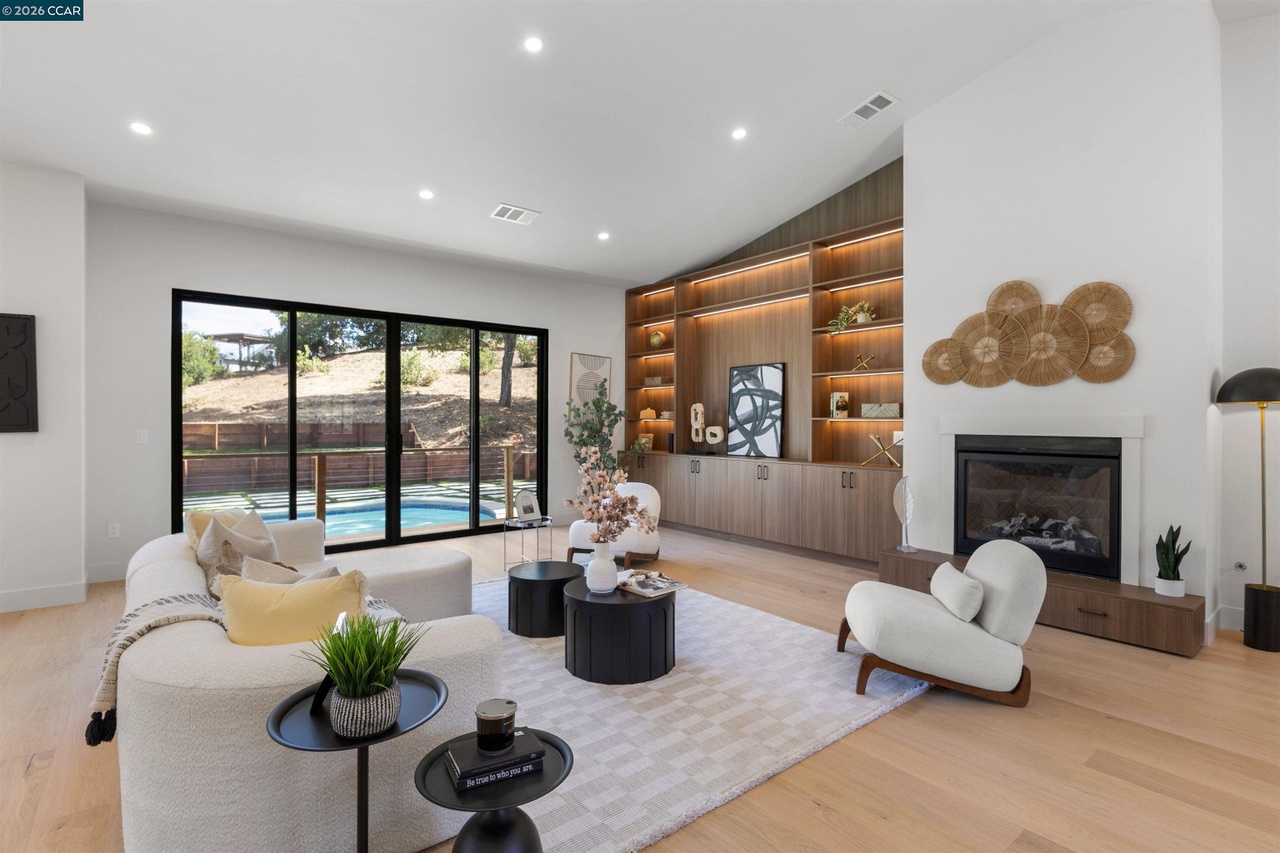
Illuminated shelving and glass display cabinets. Light is placed to show objects and books without bright reflections in glass, and the shelf material and edge detail decide whether the source is hidden.
Architectural lighting
A crown moulding with an LED ledge, or a lit reveal, washes the ceiling or wall and makes the cabinetry read as part of the room. It is usually dimmed and switched with the room lighting.
Closet and interior lighting
Light inside hanging sections, drawers or pantry cabinets helps distinguish colors and contents. Door switches or sensors are common, and they need to be chosen early because they affect the cabinet construction.
Integrated lighting in completed rooms.
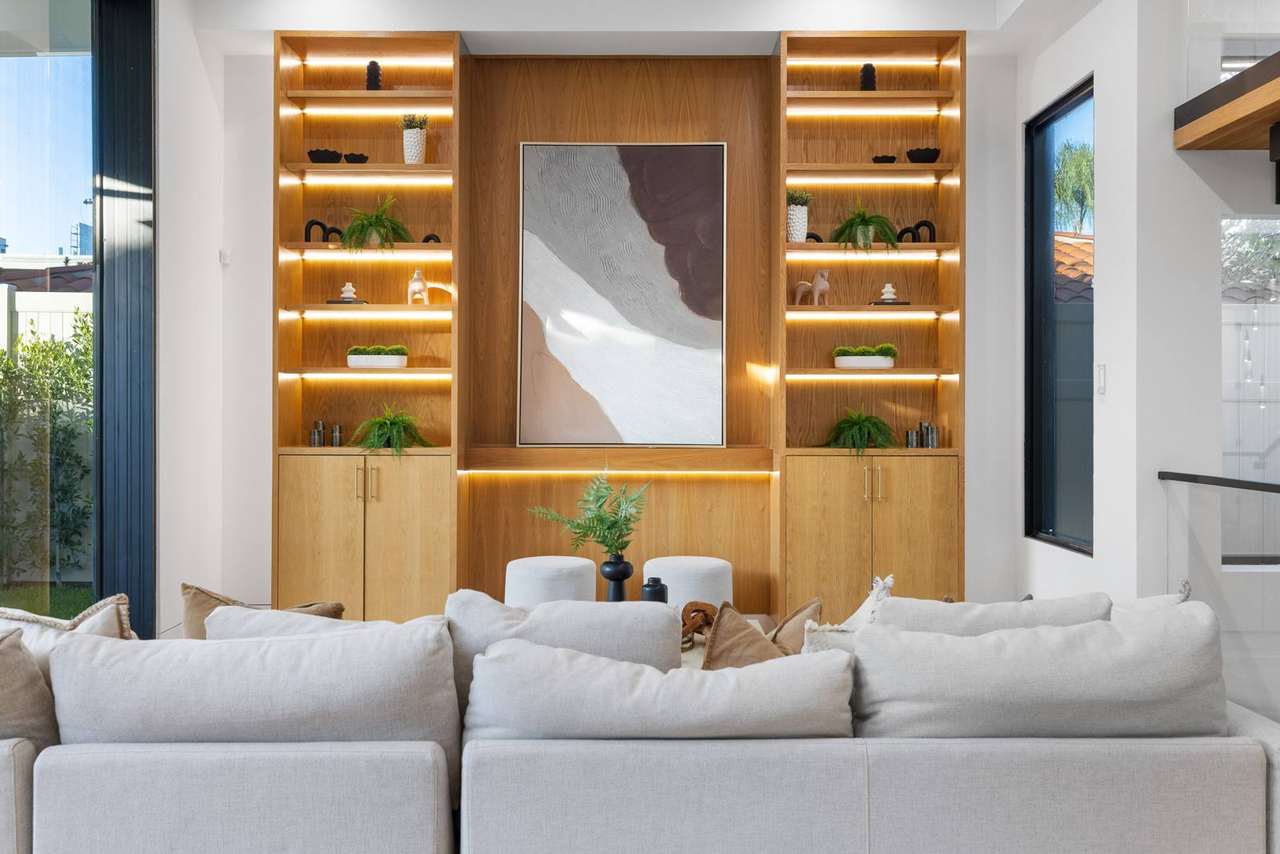
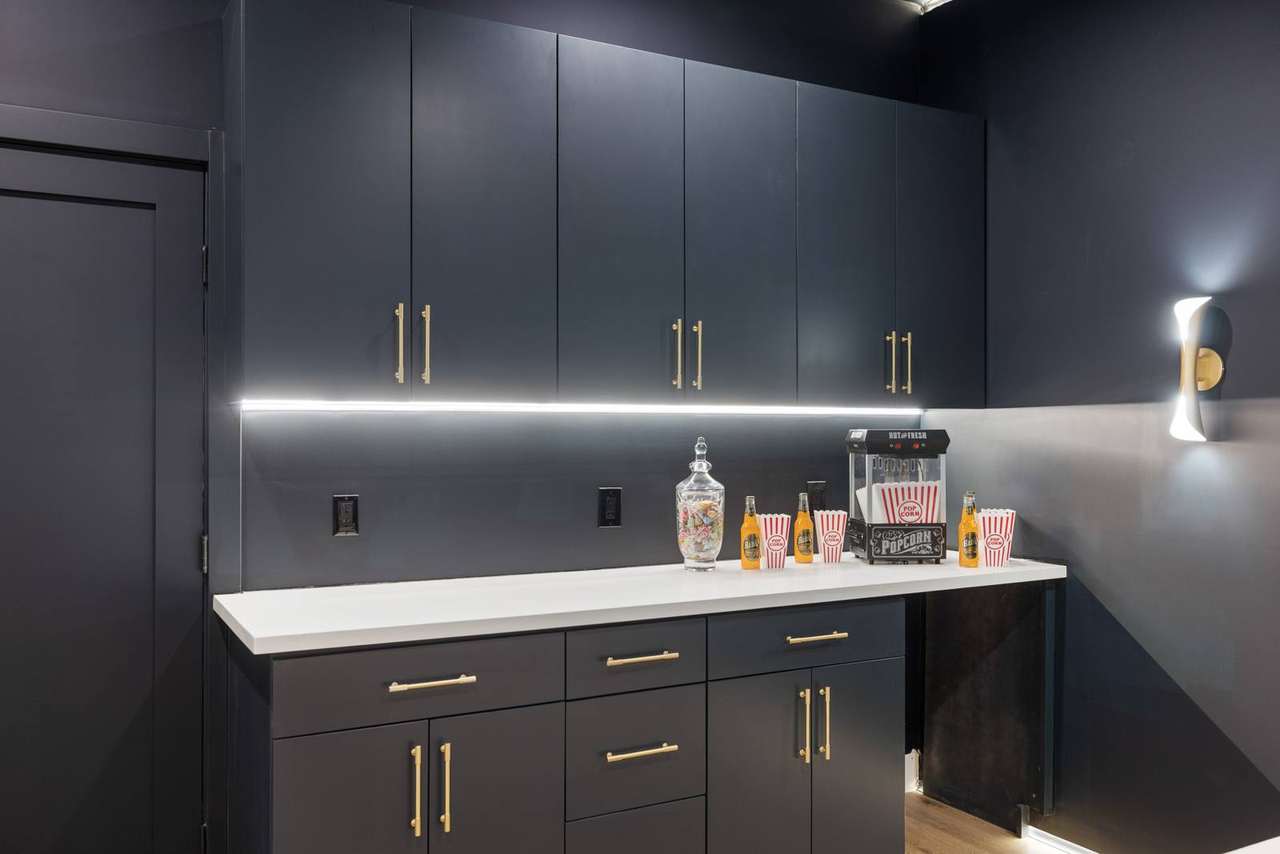
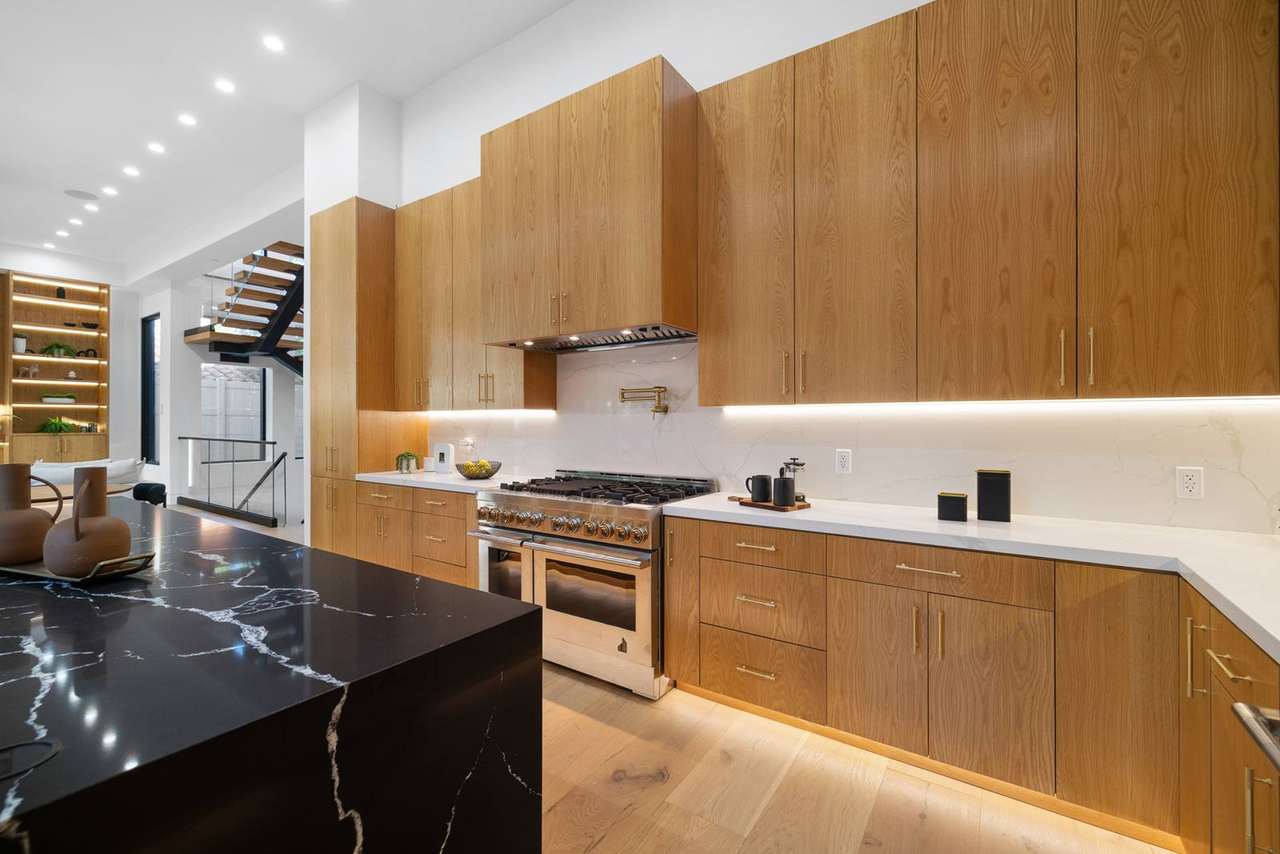
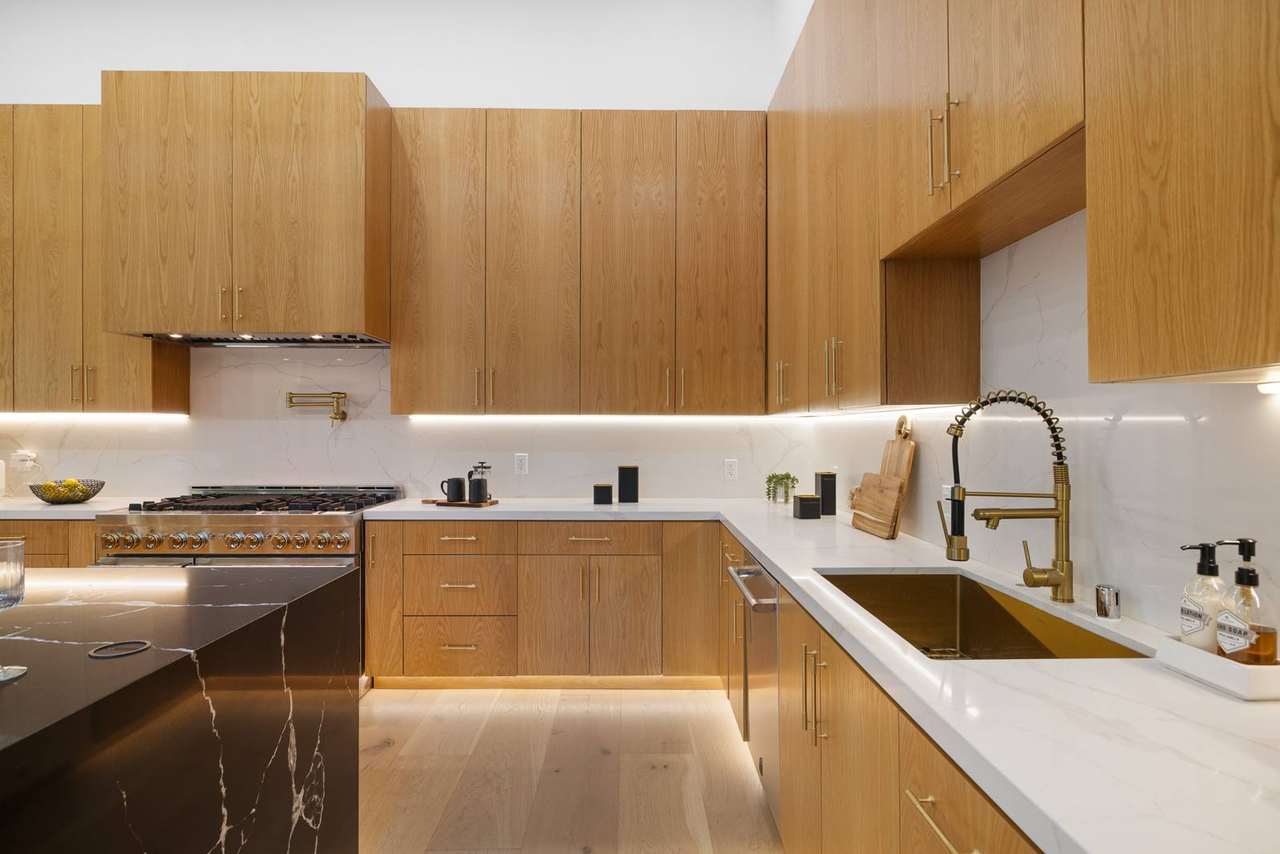
These photographs are completed Millwork USA work. In the Encino Residence in Los Angeles: illuminated living-room shelving with concealed lighting and lower storage, a media room with dark cabinetry, brass hardware and integrated linear lighting, and a kitchen range wall and sink wall with integrated lighting. In the Lancaster Residence: illuminated living-room shelving with integrated storage.
The parts you do not see.
The visible line of light is the smallest part of the system. Most of the design work concerns what sits behind it, and those parts determine whether the lighting can be maintained.
Channels and diffusers
LED tape is mounted in an aluminum extrusion that carries heat away and holds a diffuser, which softens the individual LEDs into a continuous line. Current Millwork USA proposals specify KLUS LED aluminum extrusions, routed into the cabinetry so the profile sits flush or is hidden behind an edge.
Drivers
LED tape runs on low voltage supplied by a driver. Drivers produce some heat and eventually need replacement, so each one needs a ventilated, accessible location: a removable panel, a toe-kick space or an adjacent cabinet, never sealed behind a fixed back.
Wiring paths
Low-voltage wires travel through the cabinetry from each light to its driver. The routes are drawn and machined before assembly, with a little slack left so a fixture can be removed and reconnected.
Switching and dimming
Wall switches, door switches, sensors and dimmers each place different demands on the driver. The dimmer and the driver have to be compatible, which is a selection made with the electrician, not on site.
Color consistency
Choose one color temperature and one product family per room where possible. Light from different products can look noticeably different on the same wood or stone.
How integrated lighting is coordinated.
Integrated lighting touches the designer, the cabinetmaker and the electrician. It goes smoothly when the order of decisions is agreed at the start. Electrical work and other specialist trades remain separate scopes unless the project agreements state otherwise.
- 01
Lighting intent
Mark on the elevations which shelves, counters, cabinets and moulding are lit, and how each group is switched.
- 02
Power and rough-in
The electrician confirms where line-voltage power and switch legs arrive, so drivers can be placed close to them and remain accessible.
- 03
Shop drawings
The drawings show the extrusion locations, driver positions, wire routes, access panels and switch types. This is the point to change anything.
- 04
Fabrication
Channels and wire paths are machined into the parts before finishing, which is why late lighting changes are costly.
- 05
Installation and connection
The cabinetry goes in with its low-voltage components in place; final electrical connections are made by the appropriately licensed trade.
- 06
Testing and adjustment
Test every circuit with the final dimmers and switches before the room is handed over, while panels are still easy to reach.
What typically goes wrong, and how to avoid it.
- Visible LED dots reflected in polished stone or glossy fronts: use a diffused channel and keep the source out of the line of sight.
- Glare at eye level from shelf lighting placed at the front edge: angle or recess the source, or light from the sides.
- A driver sealed behind a fixed panel: every driver needs an access route that is shown in the drawings.
- Different color temperatures across a kitchen and the adjoining room: specify them together.
- A dimmer that flickers or buzzes with the chosen driver: confirm compatibility before ordering.
- Lighting added after fabrication: it usually means surface-mounted fixtures and exposed wires where a concealed detail was intended.
Permanently installed lighting in California homes may also be subject to the state energy code. The electrical designer or electrician confirms the requirements for the specific project.
How lighting appears in a proposal.
In Millwork USA proposals, lighting is shown separately on every line: each price is divided into materials, fabrication and labor, installation, lighting and accessories. The lighting we design and price includes under-cabinet lighting, illuminated glass display cabinets, crown moulding with an LED ledge and closet lighting.
A premium integrated LED package is offered as a separately priced alternate. You can select or decline it without changing the base cabinetry scope, which makes it straightforward to compare a simpler lighting approach with a fully integrated one before drawings are approved.
Frequently asked questions.
Where should the LED driver go in a cabinet installation?
The driver should sit in a ventilated, accessible location close to the power supply, such as behind a removable panel, in a toe-kick space or in an adjacent cabinet. It must never be sealed behind a fixed back. Its position is shown in the shop drawings.
How do you avoid seeing LED dots in cabinet lighting?
Mount the LED tape in an aluminum channel with a diffuser and position it out of the direct line of sight. Polished stone and glossy fronts reflect individual LEDs, so these surfaces need extra attention. Testing a sample in the actual material is a reliable check.
Can lighting be added to cabinets after they are built?
It can, but usually only with surface-mounted fixtures and visible wiring. Concealed lighting needs channels and wire paths machined into the parts before finishing. Decide on lighting before the shop drawings are approved.
Who connects integrated cabinet lighting to the house wiring?
Final line-voltage connections are made by an appropriately licensed electrician. The cabinetry carries the low-voltage components and wire paths, and the drawings show where power must arrive. Electrical work is a separate scope unless the project agreements state otherwise.
Is integrated lighting priced separately from the cabinetry?
Yes. Millwork USA proposals show lighting as its own component on each line, and a premium integrated LED package is offered as a separately priced alternate. You can accept or decline it without changing the base scope.
Do you design integrated lighting for Los Angeles projects as well as the Bay Area?
Yes. Our current focus is the San Francisco Bay Area and Greater Los Angeles, and the completed lighting work shown on this page is in Los Angeles-area and Lancaster homes. Delivery and site coordination are confirmed for the specific project location.
Send what you have.
Share the rooms, project location, photographs or drawings and target timing. You can start without a complete drawing set.
Millwork USA LLC provides custom millwork design-development, manufacturing, supply, delivery coordination and related project services. Installation services requiring a contractor's license are performed under separate agreement by appropriately licensed independent contractors.